
6 rules to lock down before running a solo website
Solo websites usually fail from scope sprawl, not from a single technical mistake. Publishing, maintenance, analytics, and fixes all compete for the same limited attention, so every missing rule turns into repeated decision fatigue.
If you want a site that can survive when you are tired or busy, you need a small operating baseline first. These six rules are the first layer.
Use the solo website operations unit page as the main index for the follow-up posts. This article should stay the baseline that later maintenance, publishing, and priority guides build on.
1. Lock the publishing rhythm
A solo site gets unstable when publishing depends on mood. Decide what a realistic cadence looks like before ambition takes over.
For example, one solid post every week or every two weeks is usually more sustainable than promising three updates and failing to maintain any of them.
2. Maintenance needs a fixed checklist
Updates, feeds, links, forms, and verification files should not depend on memory alone. A small maintenance checklist removes most avoidable breakage.
A simple weekly pass for links, RSS, sitemap, contact flow, and analytics is often enough to catch most operational drift early.
3. Decide what you will actually measure
One person cannot track everything. Choose a small set of numbers that actually influence the next decision, such as clicks, page depth, and publishing cost.
If a metric does not change what you publish or what you fix next, it probably does not belong in the primary solo dashboard.
4. Scope control is an operating rule
Adding one more feature, section, or template seems harmless until it multiplies maintenance. Decide what the site refuses to become.
That can mean refusing new content types, avoiding custom templates, or postponing features that add more upkeep than value.
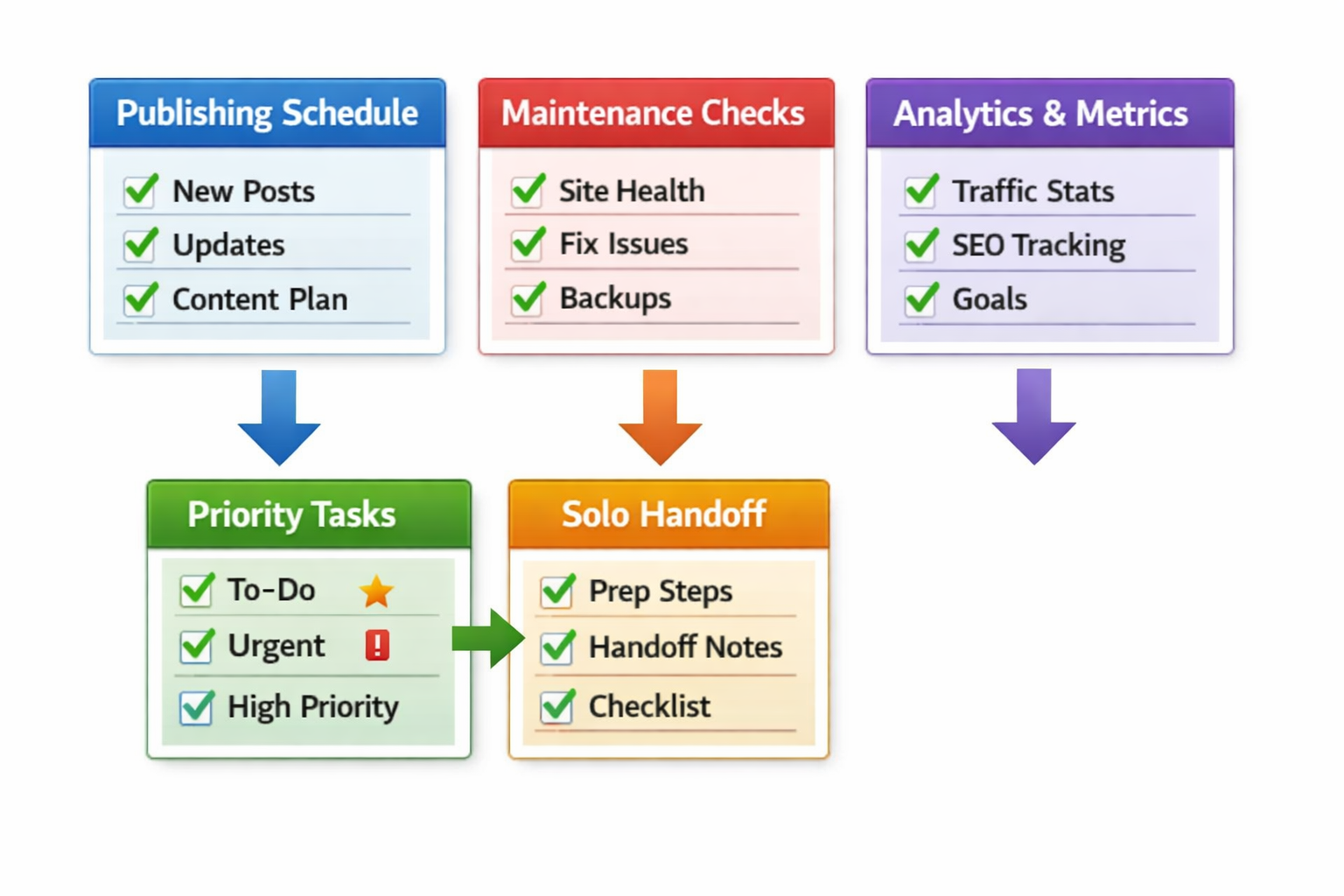
5. Priority should be visible
Solo operations get easier when current work, next work, and backlog are visibly separated. Otherwise everything feels urgent at the same time.
A lightweight board or even a simple text queue is enough, as long as today's work is clearly separated from later ideas.
6. Have a fallback for low-energy weeks
A durable site still moves when energy drops. Define the minimum publish or maintenance mode that keeps the site alive without forcing full effort every week.
The fallback can be as small as one short update plus one maintenance check, but it must be defined before low-energy weeks arrive.
What to lock first
If you are setting this up now, lock publishing rhythm, maintenance checks, and scope control first. Those three decisions remove most of the chaos before the site grows.
After that, go back to the unit page and split the next articles into maintenance loops, publishing cadence, measurement, or low-energy fallback guides. This page should remain the baseline instead of turning into another productivity essay.