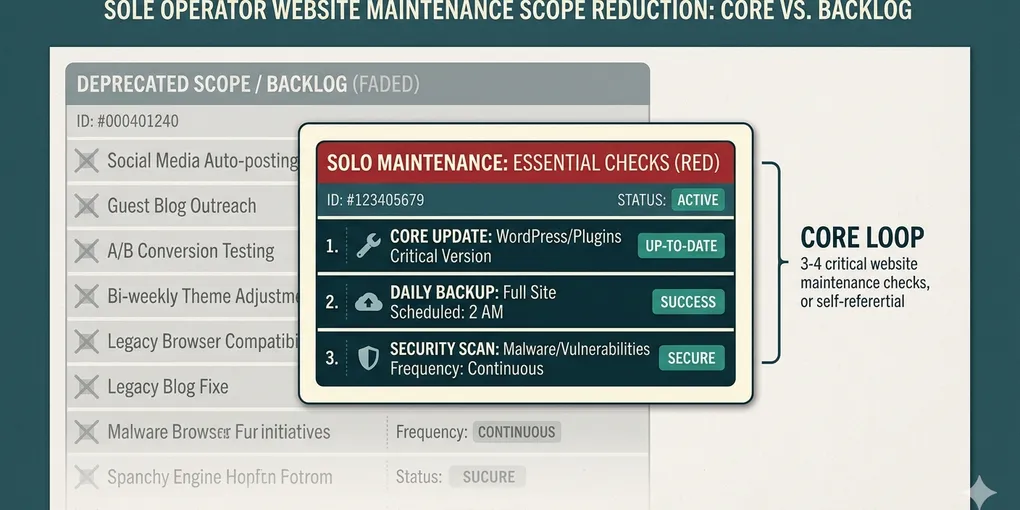
How to reduce maintenance scope for a solo website
Solo sites break when the maintenance surface keeps expanding and the core loop never gets protected.
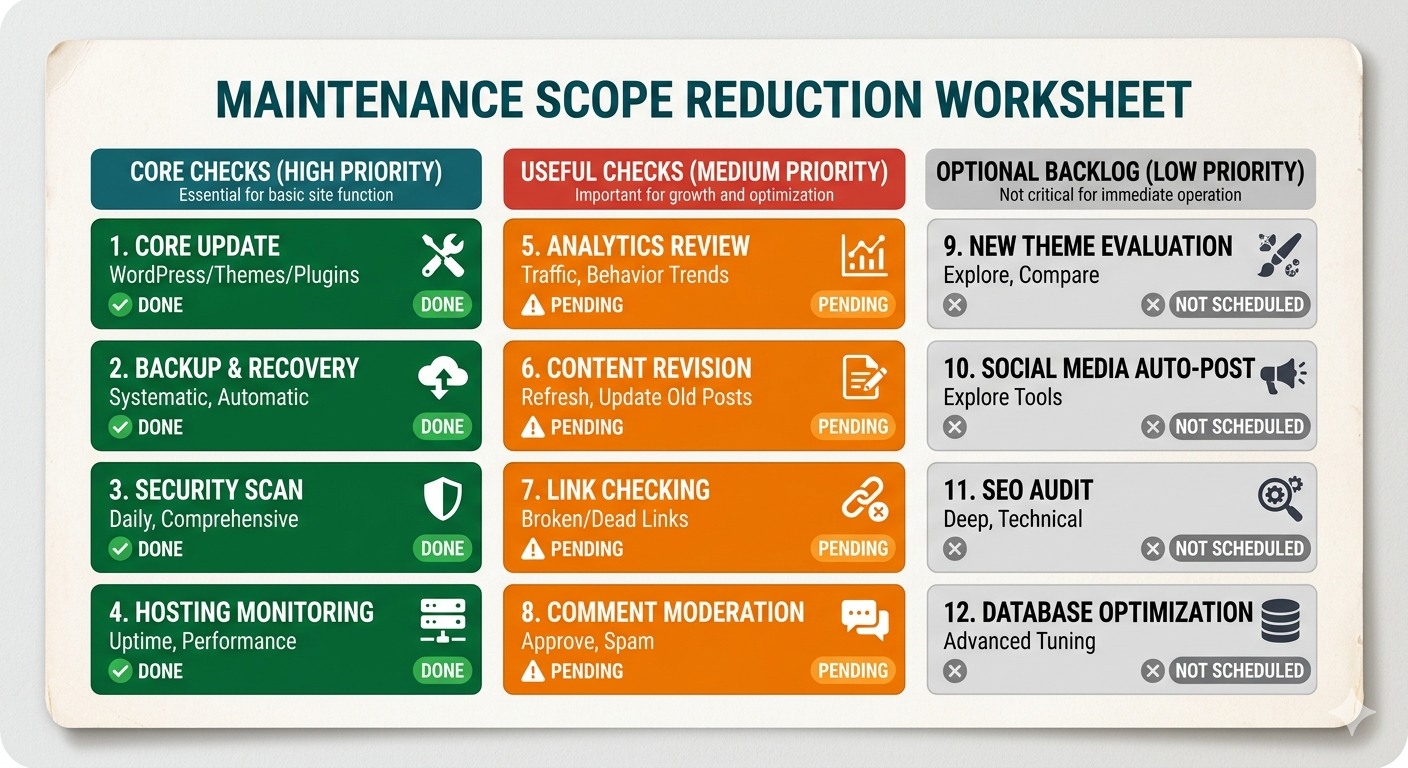
Before you add tools or automations, split your tasks into three buckets: trust-critical, useful, and optional.
1. Define one core loop you can finish
Keep a small weekly loop that protects trust: uptime check, critical forms, analytics signal, and one feed or sitemap check. If it cannot fit in 30 minutes, it is too big.
2. Move slow tasks to a monthly lane
Many tasks feel urgent but do not change decisions week to week. Move theme polishing, copy refresh, and minor layout tweaks to a monthly lane so they stop stealing the core loop.
3. Delete tasks that never change a decision
If a task never flips a decision, it is busywork. A checklist exists to protect outcomes, not habits.
What to do first
Label every task as trust-critical, useful, or optional. Keep the first group, limit the second, and cut the third.
Start with your unit page and the first operations post, then keep your weekly checklist focused on the few signals that actually move decisions.